09. January 2026
A libre research journey
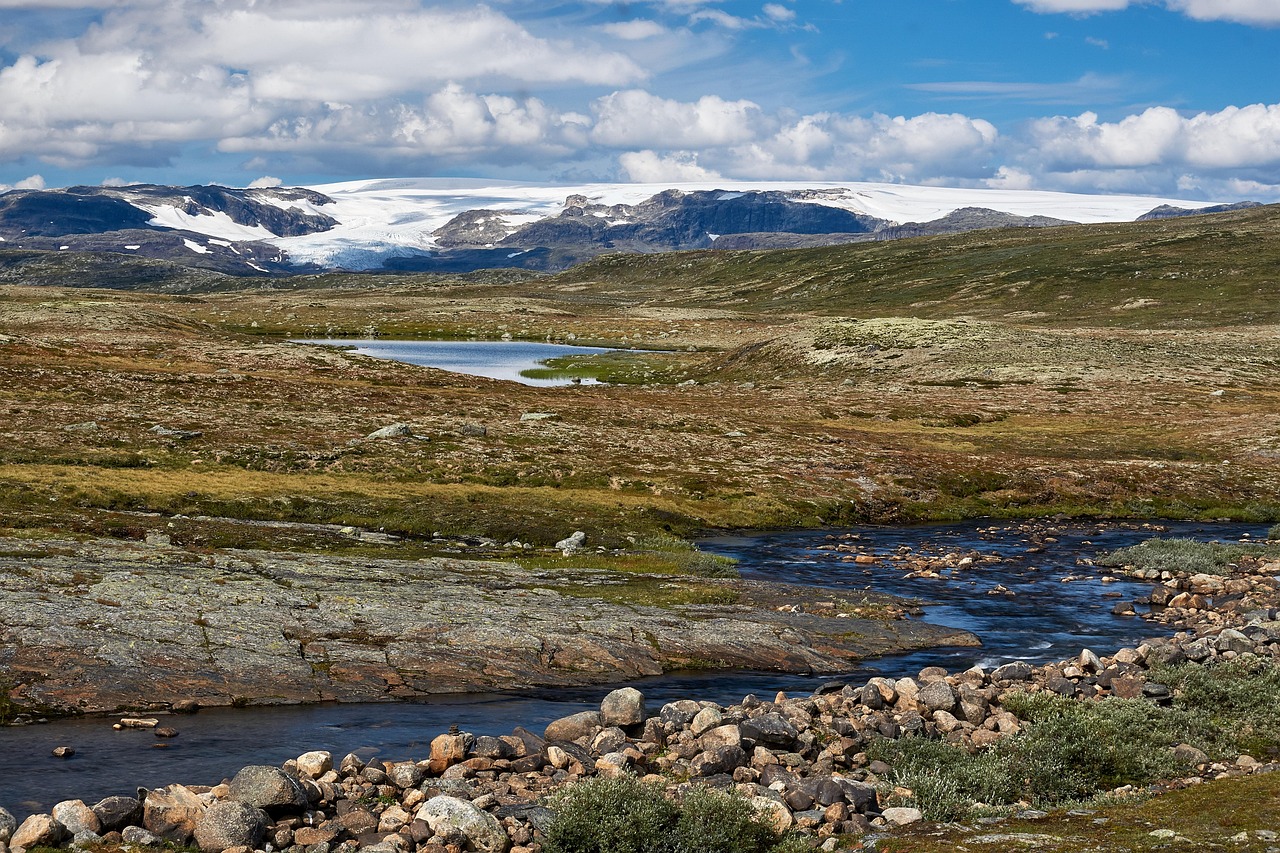
After returning from the captialistic tech industry in Norway, and recently inspired by the work of Zizek, I decided to embark on a journey of open research about a mixture of topics that interest me, including abstract mathematics, ecology and philosophy. This post is a not so organized collection of thought snippets and reflections from my journey : China->Denmark->Norway->China.
the absolute "thing"
The current dominant worldview, not limited to capitalism, seems to have wrongly assumed that there exists something optimal and absolute. This basic assumption has led to extreme pursuit of efficiency and optimization, and money(capital accumulation). According to Zizek, the fullfillment of desires is the blind pursuit of human beings, but it' s the process that matters, not the goal itself. In this sense, the current capitalist system is fundamentally flawed, as it focuses solely on the end goal of profit maximization.
Another assumption is to assume that objects in the world are independent and isolated, so individual analysis is sufficient, and to apply reductionism everywhere from natural sciences to social sciences like human resources management. The flaw is multifold: first, the world is fundamentally interconnected and relational, as shown by quantum physics and ecology. The illusion of independence comes from our limited perception and observation tools. Second, reductionism often leads to oversimplification and loss of important information, especially in complex systems like human societies.
The essence of reductionism seems to be mathematical formalism, and many pitfalls arise from abusing it for complex systems, thus being misled by the non-essence of reductionism. Again, reductionism arises from monotheistic thinking, assuming a single central controlling entity, which is fundamentally flawed. However, reductionism is widely successful in many fields, where surgery level precision is advantageous, in the era of modern industrialization.
As the incessant expansion of capitalism leads to overfullment of human desires, it doesn't answer the fundamental question of what exactly is desire, and what is the purpose, aside from endless accumulation of wealth and power. Not only the environmental crisis, but also the mental health crisis, where people lost desire itself, are rooted deeper beyond mere medical or technical issues, thus unable to be solved the methodologies of separation of variables, the prominent method in reductionism. For example:
- Depression is often modeled as a chemical imbalance in the brain, but this ignores the social isolation and lack of purpose.
- Current methods of treating ecological crisis focus on technical advancements, like renewable energy, but never mention alternatives like degrowth, or reducing consumption.
- Food shortage is often attributed to lack of supply, but there's huge food waste and unequal distribution. If the rich consume soy beans instead of meat, the inequality will be alleviated.
Not to misunderstand this post as trying to be ethically superior, the current worldview is just fundamentally boring, and people are bound to a specific job without freedom for alternatives interests and curiosities. The essence of life shall be the process of exploring possibilities, not optimizing for a specific goal. What happens if Musk lives forever and occupies all the universe? It would be the ultimate boredom, perhaps he would hope a enemy shows up to amuse him.
The current AI hype, causing massive price surges in RAM and electricity, is also funny. Capitalist invested heavily in AI, frenziedly building AI data centers, but seems to ignore that AI needs to be used by humans to be useful, and profitable.
The readers might feel the Nilhilistic(nothing matters) tone in this post, but it's the opposite: everything matters, but not in the sense of profit maximization or efficiency. However, Nilhilism is the steps to take, which is the negation of the current worldview. It's actually the negation of Nilhilism that provides new insights, which is the double negation of the status quo. This is also interesting in intuitionistic logic, where double negation is different from the original statement, unlike classical logic.
The readers might also wonder why I mix ecology, mathematics, computer science, and philosophy together. The reason is that these fields are fundamentally interconnected, and cannot be fully understood in isolation. Ecology studies the relationships between organisms and their environment, which is inherently complex and dynamic. Mathematics provides the tools to model and analyze complex systems, while computer science offers the means to simulate and visualize these systems. Philosophy provides the framework to question the underlying assumptions and values that guide our understanding of the world.
In contrast, Daoism, an ancient Chinese philosophy, emphasizes the interconnectedness thus in harmony with the mindset of ecology and complex systems. Perhaps, that's one reason why China has arisen in a reductionist world dominated by Western thinking. The reductionist approach adopted in full lead to low efficiency and bureaucracy, according to my experience working in a big tech company in Norway. Everyone is specialized in a narrow field, and communication is difficult. On the other hand, the East approach, emphasizing more from the pragmatics and sacrificing some precision, leads to unique advantages.
An interesting feature of capitalism is it will price the defiant, or the non-conformist, for high value, as they are rare and unique. In contrast, capitalism it self is homogenizing everything, trying to make everything standardized and efficient(also defined by capitalism itself). This paradox is amusing, as capitalism is encouraging and supressing the uniqueness at the same time. Ironically, this is similar to life it self, which is in a constant struggle between order and chaos, stability and change.
The current organization or companies, whatever for profit or non-profit, seems to share similar characteristics:
- trying to impress investors for funding. If successful, the organization is indebted. If failed, go to the next investor. Similar things happen for internal funding inside big companies.
- incentivizing employees via monetary rewards, from the CEO to the base-level workers.
- either the company is still struggling to survive, or they are profitable, so they start some new projects to expand profits, and going back to step 1.
- only the goal matters(profit maximization, or survival), not the process.
the disease of neoliberalism
Neoliberalism, a dominant ideology as status quo, emphasizes private ownership, free markets, and little government intervention. Always cooccuring with individualism, people often seek to "find themselves" , or "find who you really are", but actually often through consumption or addiction. This is fundamentally flawed, as there's no such absolute "self" to be found. However, as a double-edged sword, individualism also encourages innovation. The culprit is the push to "be the best" being too extreme, leading to social isolation and mental health issues.
After working in a big tech company in Norway, I got this disease, where single-value optimization like profit maximization and KPI is everything. No teamwork, no collaboration, no curiosity, and employees are treated as mere cogs in the machine. The work is following orders and finishing tasks without understanding the big picture and collaborating with others. The workload is light, but the mental burden is heavy, as people are distantly looking for their "best self" lonely. Colleagues are happy to chat about consumption, but never topics beyond that. The only way to survive is to join consumption, and deem myself superior to others via symbolic things, whatever consumerism or the permanent residency in a developed country.
The cure is to return to a place which is not so "developed" and not so monotheistic, where things are more chaotic and interconnected, like China. The food is diverse and fresh, the food markets are everywhere and dirty, the people are not superficially polite but direct, the streets are noisy and crowded with scooters. The living cost in each city differ dramatically, and choices are too abundant. In developing countries like China, people are inherently practical and cares about concrete things like food much more, and philosophical thinking is almost non-existent. This is refreshing, as my body is enjoying the medley of foods, and my mind is still indulging in abstract things.
However,before leaving China, I never thought about those advantages, as I was too used to them. It's only after experiencing the sterile and monotonous life in Norway that I gradually realized and reflected on the importance of diversity and the process. Ironically, it's the isolation that encouraged me to think deeply in a philosophical way, which explains why many philosophers are from western countries. Even more self-contradictory, I'd like to use the reductionist method to criticize reductionism itself, and analyze the complex systems via the method of reductionism. So it seems I != I, denying the law of reflexivity in classical logic.
It'd be too easy if the cure is just like that. The essence of consciousness is in deed, the feeling of isolation, the illusion of a "separate soul" independent of the physical existence, and now it's the era of extreme individualism which exacerbates this illusion beyond the balance. The cure is to enjoy the process, not pursuing the goal too hard, and embrace the interconnectedness.